Choosing tiles for the kitchen goes far beyond finding the right colour, effect and laying pattern. The right tile needs to suit how the room is used, stand up to the demands of everyday life and work with the other materials in the space. From floor tiles that can cope with heavy foot traffic to splashbacks that introduce colour while needing to be stain resistant, there are several practical and design decisions worth considering.
María D Arráez, director of Tile of Spain UK, shares her advice on what to think about when selecting tiles for a kitchen renovation.
Determine how the psace will be used
“Before looking at colours and patterns, think about how the kitchen is used daily and where the tiles will sit. Flooring needs to cope with regular foot traffic, spills, dropped food and frequent cleaning, while splashbacks and wall tiles give you more freedom to experiment with colour, shape and finish.
If you have children, pets or a kitchen that opens directly onto the garden for example, durability and ease of cleaning will be especially important. Porcelain and ceramic are both well suited to busy kitchens, whether used on the floor or walls, as they are incredibly hard-wearing and simple to maintain.”
Think about size and layout finish
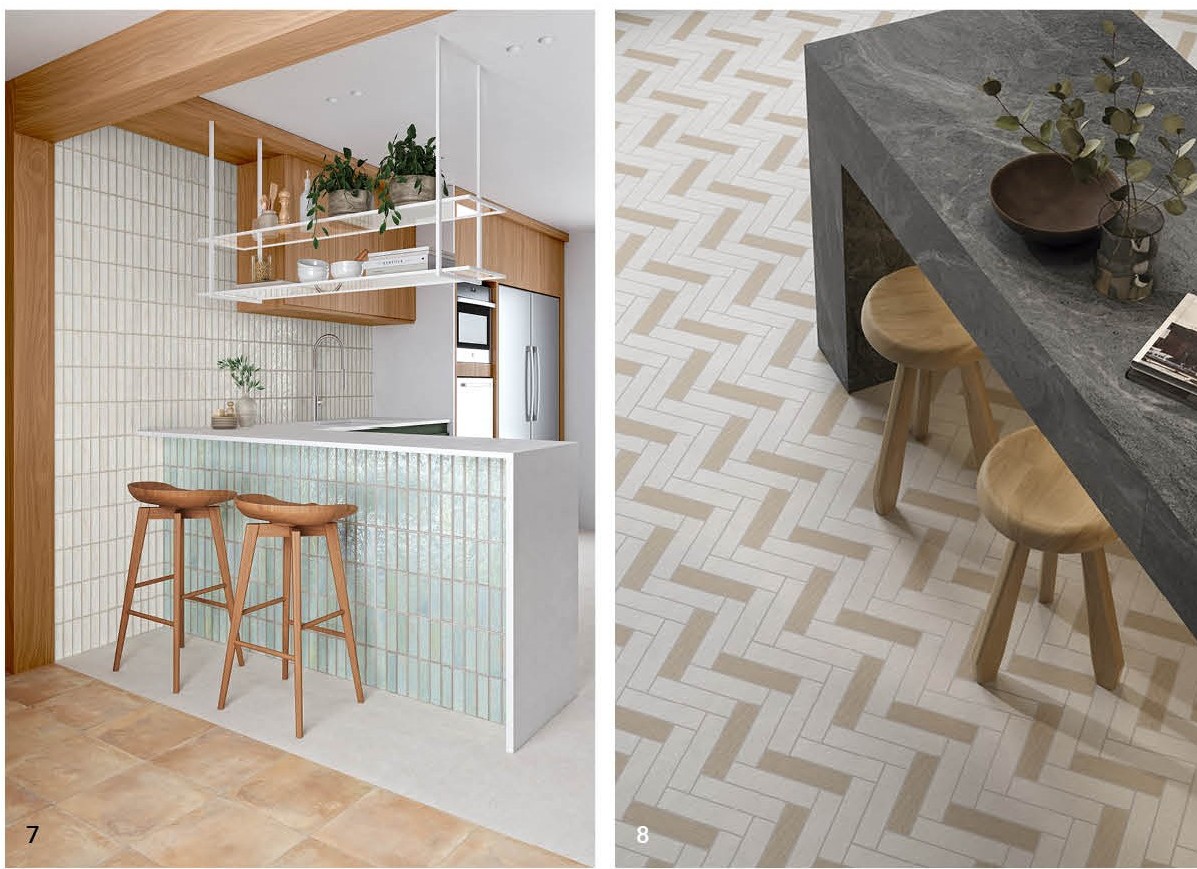
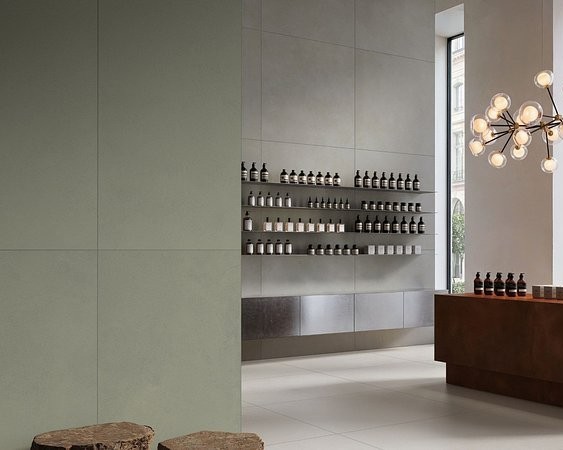
“Tile size makes a noticeable difference to how a kitchen feels. Large-format tiles have fewer grout lines and create a sense of spaciousness, which is useful in both open-plan layouts and smaller spaces where you want a cleaner, more streamlined aesthetic. Smaller format tiles work particularly well on splashbacks, behind a hob or around shelving and islands where you want to add more detail. The laying pattern matters too. A simple rectangular tile can look completely different depending on whether it is stacked vertically, laid in brick bond or arranged in a herringbone pattern.
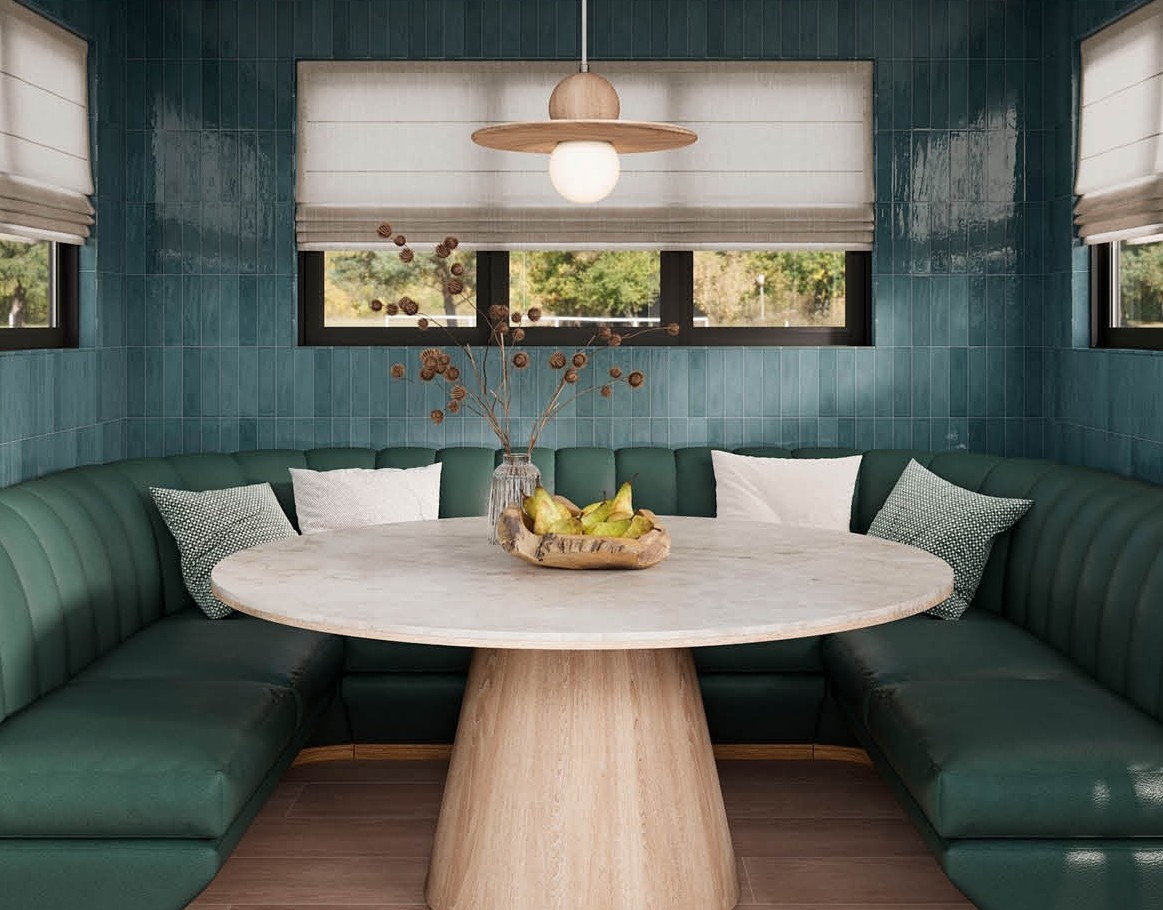
The finish of your chosen tile is also equally important. Gloss tiles help reflect light and therefore work well on walls, while matt finishes tend to be more subtle underfoot. Textured and handmade-effect tiles add depth and interest, but in areas exposed to cooking it is worth considering how easy the surface will be to wipe down.”
“Your floor and splashback don’t need to match, but they should work together seamlessly. If you are choosing a patterned floor, you may want to keep the walls simpler. A quieter stone-effect or neutral floor gives you more freedom to introduce colour, decorative patterns or texture on the splashback or walls.
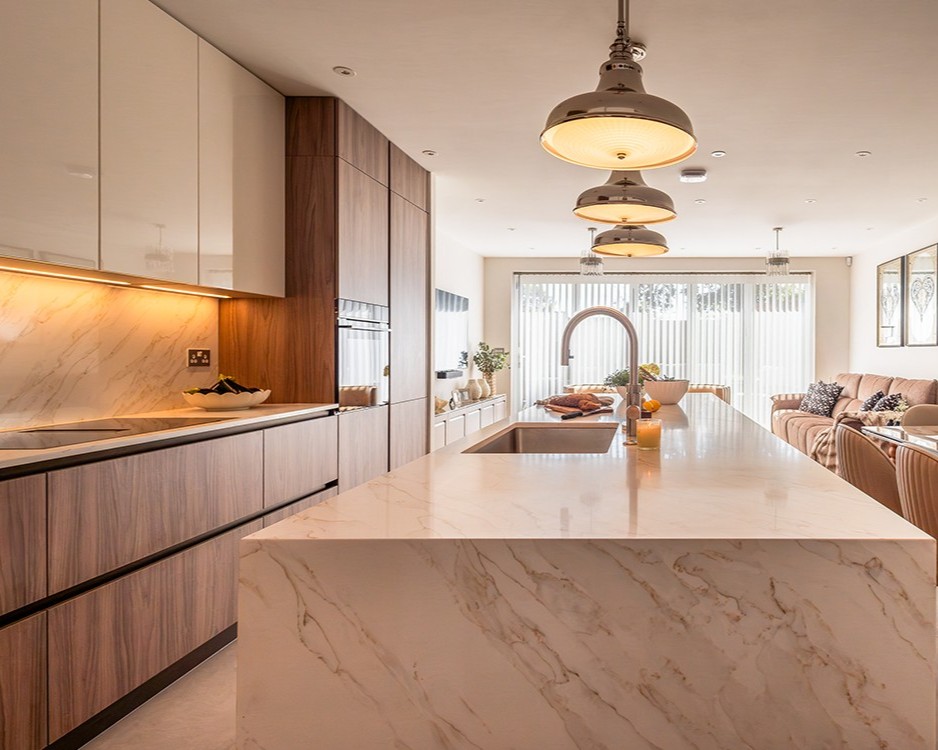
It also helps to think about the other materials already in the room. Cabinet colour, worktops, timber, metal finishes and paint all play a part in how a tile looks. Take samples home and view them in the kitchen at different times of day, as natural and artificial light can change the way colours and finishes appear.
Decide early on where you want the main focus of your kitchen to be. That could be the floor, the splashback or a tiled area around the island, but not every surface needs to make a huge statement.”
Pay attention to the finishing details
“Some of the smaller decisions can have a big effect on the final result. Grout colour is a good example. Choosing a shade close to the tile creates a more continuous finish, while contrasting grout highlights the difference in shape and laying pattern. Neither approach is right or wrong, but it is worth deciding what you want the grout to do rather than leaving it until installation day.
Think about edges and transitions too, particularly where tiled flooring meets timber or where a splashback meets painted walls or cabinetry. These details can make the finished kitchen look much neater.
Lastly, order enough tiles from the outset. Allow a small percentage of 10% for cuts, breakage and future repairs as this can save problems later, particularly with patterned or batch-produced tiles where replacing an exact match may be difficult.”