Put on a jumper, not the heating: new research challenges how we stay warm
74% say warming themselves directly is more effective than heating the room around them. As rising energy costs change the way we think about comfort, households are looking for smarter ways to manage energy use throughout the colder months.
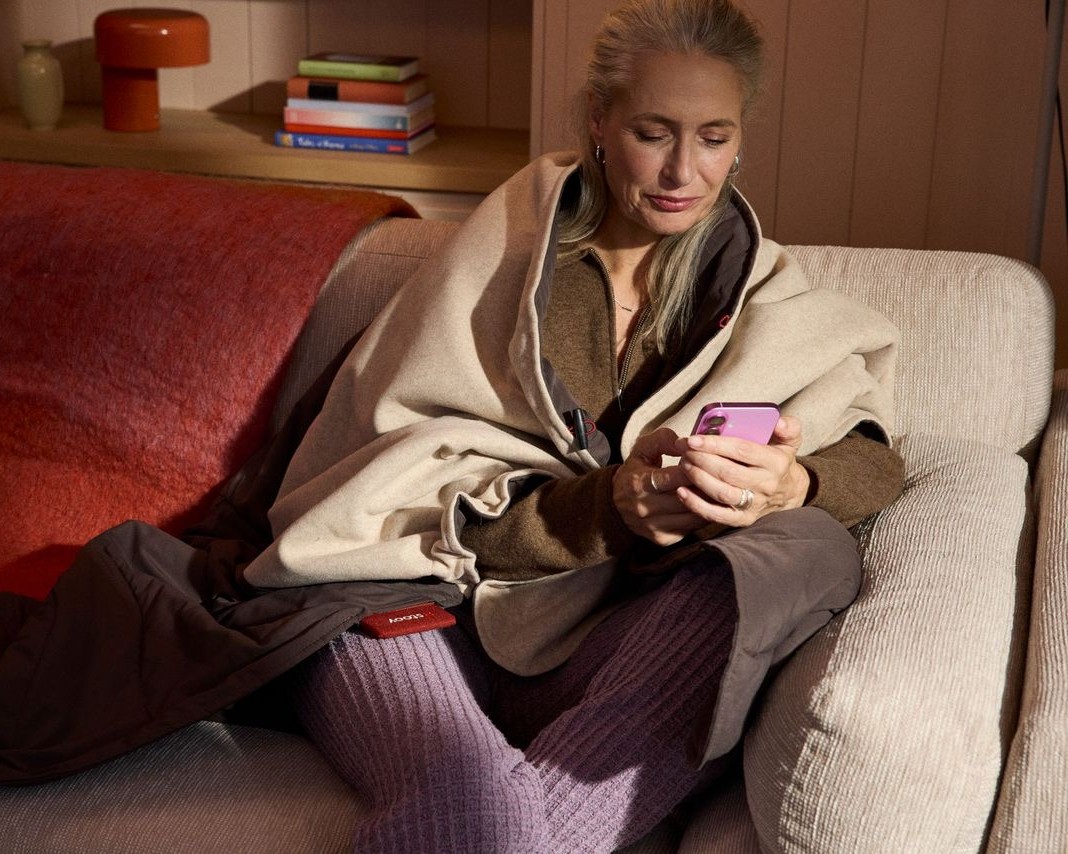
New research from Dutch warmth brand Stoov reveals a shift in how Brits stay warm, with people increasingly choosing to warm themselves rather than heat the whole house. Instead of automatically reaching for the thermostat, many are looking for targeted, personal ways to stay cosy.
This is according to The Science of Warmth Report 2026 by Dutch warmth brand Stoov, based on its annual Annual Warmth Survey among 2,766 customers in the UK, Netherlands, and Germany.
Among UK respondents, 64% state that it is “very important” to be able to control their own warmth, reflecting the fact that we all experience temperature differently.
The desire for more personalised comfort is part of a broader trend. 35% of all respondents say they consider ways to warm themselves before turning up the heating, while 76% are mindful of energy costs ahead of autumn and winter.
The research also highlights the link between warmth and wellbeing. For 89% of people surveyed in the UK, feeling physically warm has a direct impact on their mood or stress levels, suggesting that warmth is not just about physical comfort, but can influence how we feel day to day.
From heating entire rooms to heating ourselves
Space heating accounts for by far the largest share of household energy use. This means the shift towards personal warmth is not only about comfort, but also offers significant potential for energy savings.
Across the entire survey group, 94% say having individual control over their personal warmth is important. This need is particularly easy to recognise during sedentary activities such as working from home, watching TV or reading.
These are the moments when warming yourself, rather than heating the entire room, can make sense.
The never-ending battle over the thermostat at home
According to the research, almost two-thirds of multi-person households (62%) regularly disagree about the thermostat. One person sitting on the sofa in a jumper while another wants to open a window is not simply a matter of personal preference.
As many as 91% of respondents say they regularly feel cold in spaces where the people around them appear perfectly comfortable, highlighting just how differently we can experience the same temperature.
There are also measurable biological differences between men and women in particular. According to Dr Hannah Pallubinsky, Assistant Professor of Thermophysiology at Maastricht University, women on average feel comfortable at an ambient temperature approximately 2.5°C higher than men.
“On average, women have smaller bodies and therefore a relatively higher surface-area-to-volume ratio, meaning warmth escapes more easily. Add typically lower muscle mass, with muscle tissue playing an important role in producing heat, and it is easy to understand why many women feel the cold sooner.
“As always, these are general tendencies, not fixed rules: bodies vary widely regardless of gender,” explains Pallubinsky.
Research published in The Lancet also shows that women’s hands are, on average, around 4°C colder than men’s, something 87% of female respondents recognise from their own experience. Body temperature also changes throughout the menstrual cycle: 64% of female respondents notice differences in how warm or cold they feel during different phases of their cycle.
Despite these gender differences, the standard comfort temperature is set at 21°C. This standard has its origins in comfort research from the 1970s and is based on the male body and the metabolism of a 40-year-old man weighing 70 kilograms.
“Comfort research carried out in the 1970s predominantly involved men. Research shows that, at the same temperature, women need more clothing to feel comfortable because they simply experience that temperature as colder,” Pallubinsky explains.
Comfort is not only physical: 86% of respondents overall say warmth has a positive effect on their mood. And according to Pallubinsky, having control over your environment can be just as important as the temperature itself:
“Even when it is colder or warmer, it really helps if people know they have the option to do something about it.”
The time of day matters too
It is not only between people that perceptions of warmth differ; they also change within the same body throughout the day.
As many as 71% of UK respondents find it harder to fall asleep when their body feels cold. This ties in with the circadian rhythm, the body’s internal clock, which causes core body temperature to fluctuate throughout the day.
“Fluctuations in core body temperature caused by the circadian rhythm generally remain within a range of plus or minus 0.5°C. That is the rhythm at rest. If you exercise, start sweating or step out into the cold, those fluctuations can be much greater,” Pallubinsky explains.
This may also help explain why 71% say it is always harder to fall asleep when they feel cold.
Not less comfort, but smarter heating
Small adjustments at home can add up to a significant difference.
Stoov’s Impact Report 2024/25 and figures from KlimaatHelpdesk show that lowering the thermostat can already make an impact. Stoov’s data indicates approximately 5–7% less heating energy consumption for every degree the thermostat is lowered, while KlimaatHelpdesk estimates 8–16% gas savings when lowering the temperature by 1–2°C. Both sources therefore point in the same direction.
Personal warmth can help people remain comfortable without immediately heating the entire room to a higher temperature. This can not only reduce energy consumption, but also CO₂ emissions.
For an average household with a central heating boiler, lowering the thermostat by 1–2°C can result in savings of approximately 170 to 340 kilograms of CO₂ per year, according to KlimaatHelpdesk. When large numbers of households make this change, the collective impact can quickly add up.
“The future of warmth is not about choosing between comfort and sustainability. It is about realising that we do not have to choose,” says Stoov founder Teun van Leijsen.
About the research
The Science of Warmth Report 2026 is based on Stoov’s Annual Warmth Survey, conducted among 2,766 customers in the UK, Netherlands and Germany. The findings are supplemented by interviews with Dr Hannah Pallubinsky, Assistant Professor of Thermophysiology at Maastricht University, and independent scientific research.